Table Of Content
These ships incorporate a complete ABB propulsion - Azipods, electric power plant, computer automation, and software. Crystal cruise ships are powered by two "Azipod D" units allowing navigation in polar destinations. Each of the Star Cruises "Global-Class" vessels have three "Azipod XO" thrusters. All ships have installed ABB's "Intelligent Maneuvering Interface" and the "OCTOPUS" software optimizing fuel consumption and energy management. All these ships were constructed by the German shipbuilder MV Werften. Currently, almost 2/3 of all large-sized cruise vessels, icebreaking ships, and high ice-class cargo ships are with Azipod propulsion.
Types of Boat Propellers
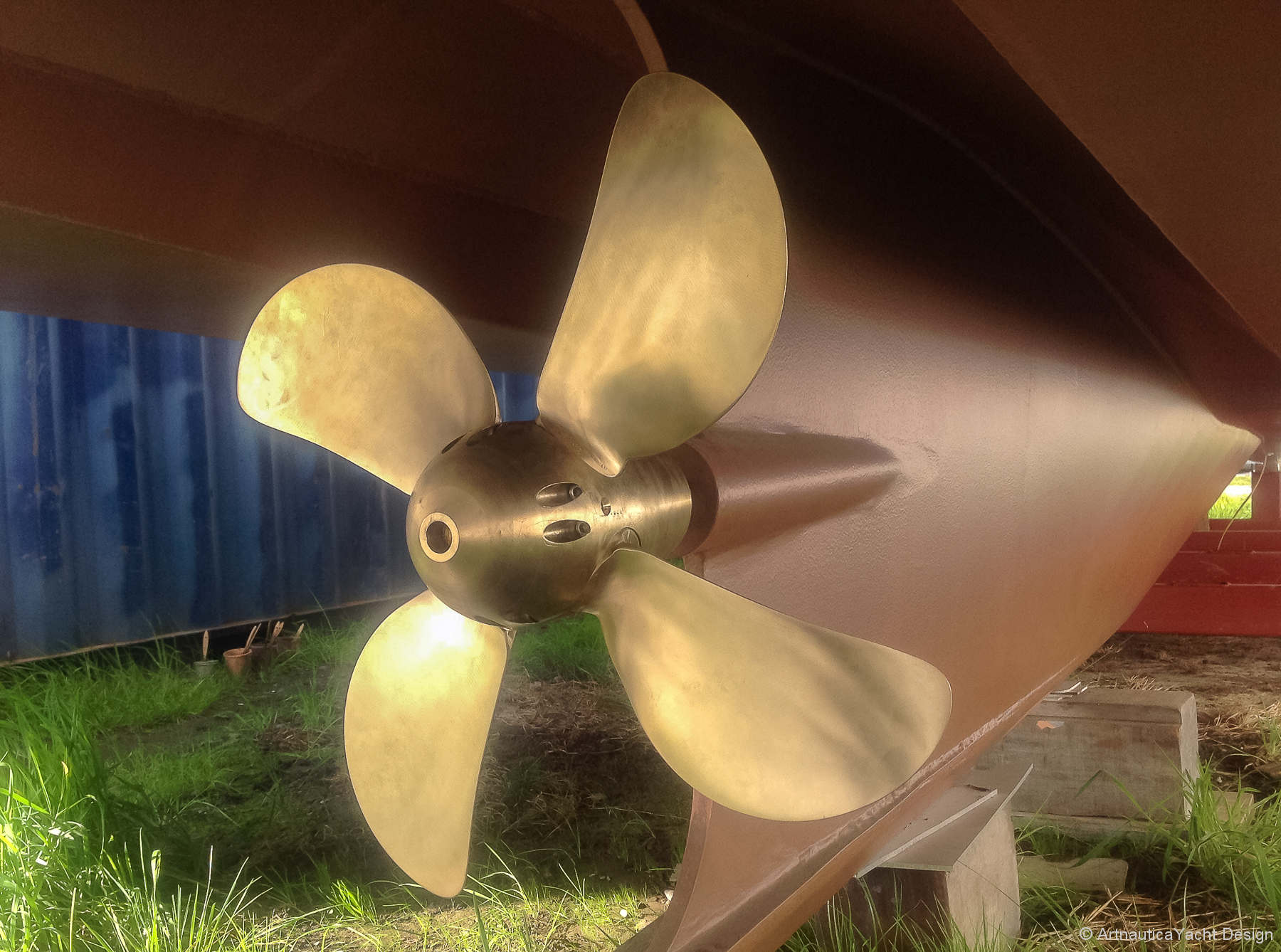
The ship holds two propellers, each about four meters long with four blades. Its height can be compared to the height of a three-storey building, making it easily contender for the biggest ship propellers in the world. This indirectly has positive effects in reducing resistance due to viscous ‘drag’ effects. We now shift our reference to the Y-Z plane (which appears when we look at the ship propeller surface from behind). The blade appears to be ‘Skewed’, that is, bent or twisted sideways. The skew of a propeller is clearly shown in the following figure.
VIDEO: Disney Wish Construction Reaches Another Milestone as Propeller Azipods Are Installed - WDW News Today
VIDEO: Disney Wish Construction Reaches Another Milestone as Propeller Azipods Are Installed.
Posted: Thu, 25 May 2023 07:00:00 GMT [source]
Why are Submarine Propellers Secret: Let’s Find Out
Modern ships use either diesel-electric engines or gas turbines as a source of power for propulsion, and for ship's systems. Some of the larger ships depend on two power sources - one for electrical power and one for propulsion. Cruise ship propellers work by turning the water in a circular motion, which creates thrust and moves the ship forward. The propellers are typically located at the stern of the ship and are powered by the ship’s engines. The propellers are designed to be as efficient as possible, so they are typically made of lightweight materials and have a smooth, streamlined design.
Why do ships’ propellers look frightening underwater?
8 Biggest Ship Propellers in the World - Marine Insight
8 Biggest Ship Propellers in the World.
Posted: Thu, 30 Mar 2023 07:00:00 GMT [source]
Larger propellers require more power, but they also create more drag on the ship. For this reason, cruise ships usually have several different-sized propellers so they can choose the best option for each situation. The mechanics of cruise ship propellers are a fascinating blend of physics, hydrodynamics, and engineering. Through precision design and careful calibration, these propellers efficiently convert engine power into forward motion, allowing cruise ships to glide through the water with grace and power. The efficiency and performance of a cruise ship propeller are influenced by several factors. Blade pitch, which refers to the angle of the blades, determines the amount of lift generated and the forward speed of the ship.
On average, boat propellers spin around 3,000 to 3,500 RPM, with high-performance boats sometimes reaching up to 5,000 RPM or even 5,500 RPM in specific cases. Knowing how fast a boat propeller spins and the factors that influence spin maximum speed can help boaters choose the right propeller type and maximize their vessel's performance on the water. Propeller diameter is not the sole determinant of propeller size. The number of blades, blade shape, and propeller pitch also play a significant role in sizing. A higher propeller diameter, combined with an appropriate blade design, allows for more efficient thrust generation and reduces the risk of cavitation. The ship’s hull design is another significant factor in determining propeller size.
With their immense size and power, cruise ship propellers play a crucial role in the navigation, maneuverability, and overall performance of these magnificent vessels. The largest cruise ship propellers are selected based on a combination of factors, including the ship’s size, power requirements, and desired performance characteristics. These massive propellers are carefully engineered to provide the necessary thrust to move these colossal vessels through the water, ensuring smooth and efficient navigation.
Diesel Electric
These vessels, both as design (hull and superstructure) and implemented technologies, are highly energy-efficient. The advanced exhaust cleaning system uses a catalytic and scrubber converter. This technology allows sulfur emissions to be reduced by 99%, and NOx emissions - by 75%. Some of the lines (including Celebrity and Cunard) have suffered vessel breakdowns due to pod-bearing failures.

Additional propeller blades can also accommodate a more powerful engine at a given diameter. These latter points are important if you’re planning on cruising unfamiliar waters and might find yourself negotiating a lee shore under power. Sailors have choices available when buying a fixed-blade propeller, with the biggest variables being the diameter, the number of propeller blades, and the pitch.

Hapag Lloyd owned a container vessel
But don’t take risks if you see a cruise ship in port and fancy getting a closer, water-level view. Again, it’s hard to visualise how fast 250 revolutions per minute is. But if you can picture it, it means that the fan blades of the propeller are completing a full revolution around four times every second. The number of propellers a ship has will determine how fast the ship is, how much fuel it needs to use to move, and how easy it is for the ship to turn. Another concern is that multiple propellers can create a lot of noise.
This phenomenon can lead to erosion and damage to the propeller blades. To counteract cavitation, the surface of the propeller blades is often coated with a special material that helps reduce bubble formation and prevent erosion. Without a source of power, these huge cruise vessels would be nothing more than drifting aimlessly hotels. A large number of older ships use diesel reciprocating engines for generating power for propulsion. Cruise ship engine power is supplied through the transmission to the propeller shafts.
HFO (heavy fuel oil) is used by diesel engines, while MGO (marine gas oil) is used by gas turbine engines. Cruise ship propellers are an essential part of these massive vessels. They allow cruise ships to travel across the oceans, carrying thousands of passengers to their destinations. Ultimately, the size of a cruise ship’s propellers is carefully chosen to ensure optimal performance, maneuverability, and fuel efficiency. These are just a few examples of the different types of cruise ship propellers available.
Now, she helps over 1 million people per month to plan their perfect cruise holidays. This photo shows the azipods on Radiance of the Seas during drydock.
For this reason, cruise ships typically operate at speeds between 20 and 25 knots (about mph). One important consideration when selecting a folding prop is ensuring that your boat can physically accommodate the length of the prop when it’s folded. This is especially important on full-keel boats that have an aperture between the keel and rudder. This carnival cruise features one of the biggest ship propellers in the marine industry.


No comments:
Post a Comment